Wholesale Garden Supplies & Bulk Imports: A Complete Guide
Oct 11, 2025
Introduction
After the COVID-19 pandemic, more people embrace gardening for sustainability, wellness, and beauty, the demand for quality garden supplies has never been higher. For businesses in this space, mastering the art of sourcing garden supplies wholesale-especially through bulk imports-is the key to unlocking growth, and beat the competition.
This guide will walk you through the critical steps, challenges, and strategies for successful local or global garden supply chain.
What is Wholesale and Bulk Orders?
Let's start with the basics. If you are already a veteran importer, you may skip this part. But keep in mind that using the right vocabulary helps reach higher efficiency in buying from China, Turkey or India.
While often used interchangeably, "wholesale" and "bulk" refer to slightly different concepts:
Definition of Wholesale
Defines as a business model where goods are sold in large quantities at a lower per-unit price, typically to retailers, commercial businesses, or other wholesalers (B2B), rather than to consumers (B2C). It represents a fundamental distribution component within the supply chain.
Definition of Bulk
Refers to the volume and packaging of the goods. Buying in bulk means purchasing large quantities, often with minimal packaging (e.g. pallets, cartons, totes) to reduce costs. You can buy bulk quantities through wholesale channels.
In essence, "buying wholesale" and "buying in bulk" are synonymous" but wholesale refers to a business model while bulk refers to goods.
Difference between Wholesale & Bulk made easy for students :
It's easy :
- wholesale supposes that you are seeking lower purchasing costs through higher volumes (how much money);
- bulk means you insist on the large quantity of goods you need to purchase (how many products)
Both can be used interchangeably, but don't refer to the same thing.
Example :
|
I want to buy carports parts wholesale. |
→ |
I want to buy cheaper carport parts because I'll buy more than a private individual. |
|
I want to buy carport parts in bulk |
→ |
I want to buy lots of carport parts, because I have a high rate of sales. |
Which of these wholesale business models suit you?
If you are new to the wholesaler's world, or are a purchasing trainee at a wholesale company, you may be interested to learn about understanding your company's role in the supply chain. It is crucial because it gives you a good understanding of your strengths and limitations in the whole supply chain. Also, as any other man-made concept, wholesale is just not as easy as it seems. There are several types of wholesale businesses, and learning the basics will help you better understand, and face competition.
Merchant Wholesalers: The Core of Wholesaling
Merchant wholesalers represent the most prevalent wholesale model. They form the backbone of traditional wholesale operations.
What do Merchant Wholesalers do?
Companies that take ownership of the goods they handle. They focus on factory-direct buying, purchasing products directly from manufacturers, or other Chinese vendors. They buy in bulk quantities and resell them to retailers, supermarkets, brands or other business customers.
I suggest you read this article for more detailed information about wholesaling.
This ownership transition distinguishes them from agency-based wholesalers and creates both inventory risks and pricing advantages for these businesses.
They fall into two main categories:
- Full-Service Wholesalers: provide comprehensive services like inventory storage, logistics, credit, and sales support.
- Limited-Service Wholesalers: Offer minimal services to keep costs low.
Agents and Brokers: Intermediary Wholesaling Models
Agents and brokers constitute a distinct wholesale category characterized by their role as intermediaries who facilitate transactions without taking ownership of goods. These entities typically work on commission structures, earning fees based on sales volumes rather than through markup pricing models. Their fundamental value proposition lies in their market knowledge, industry connections, and negotiation expertise.
While often grouped together, agents and brokers operate with meaningful distinctions in their business relationships and functions. Brokers primarily serve as transaction facilitators who bring buyers and sellers together for specific deals, typically without ongoing representation commitments. They are often engaged for particular transactions or market introductions.
Agents, conversely, usually maintain ongoing relationships with the principals they represent. The search results identify several agent types like manufacturers' agents, sales agents, purchasing agents, commission merchants.
Manufacturers' Wholesale Operations
Many manufacturers bypass independent wholesalers and set up their own distribution channels. For example, sales branches/offices, allow manufacturers to control pricing, branding, and distribution. And procurement offices, established by large retailers in key manufacturing regions to centralize purchasing and leverage bulk buying power.
Choosing a model leads to the next critical question: where should you source your products from?
Where to Buy wholesale : local or global sources?
-
Buying Wholesale locally
- Trade Shows: The absolute best way to find and build relationships with suppliers.
- Wholesale Nurseries & Distributors: These are often not open to the public. You'll need your business license and tax ID to set up an account.
- Business-to-Business (B2B) Marketplaces:Like Faire, Tundra...
-
Buying Wholesale Globally
- B2B Sourcing Platforms:Like Alibaba.com, Global Source, Made in China.com. These are key for garden supplies wholesale import and finding cheap garden supplies online.
- Search garden supplies wholesale online: Many garden supplies manufacturers have their own websites where they regularly post product information, news, and usually have contact information on the site.
- Social Media: Some companies will post product news, factory information, etc. on social media platforms such as Facebook, INS...
- International Trade Fairs: Like Canton Fair, it happens twice yearly in Guangzhou, China. It has a dedicated section for garden and outdoor products.
- Sourcing Agents: You can hire an agent or a company based in the country you want to source from. They act as your representative, finding factories, negotiating prices, and conducting quality control inspections. This reduces risk but adds a service fee.
These platforms are ideal for finding a garden supplies wholesale online or browsing a garden supplies wholesale catalog. Every sourcing decision involves a trade-off. Let's weigh the general advantages and drawbacks of the wholesale model itself.
Advantages vS. Drawbacks of wholesaling
Advantages of Wholesaling from Local Suppliers
Faster shipping and lead times is an obvious advantage, products arrive much quicker, often within days. This allows you to maintain lower inventory levels, respond faster to customer demand, and reduce the risk of stockout. Since the transportation distances are shorter, significantly reducing freight and customs costs.
Compared with importing from global, you share the same time zone, language, culture with local garden supplies suppliers. This makes communication, negotiation, and problem-solving much more straightforward. And local garden supplies wholesaler center may have more flexible and lower MOQ, making it easier for small businesses to test new products without a massive financial commitment. It's simpler to visit the supplier's warehouse, inspect goods in person before large orders, and manage returns or exchanges if there's a defect.
And sourcing locally keeps money within your community, supports local jobs, and can be a powerful marketing point (e.g., "Made Locally" or "Supporting Local Artisans").
Disadvantages of Wholesaling from Local Suppliers
Local labor, materials, and overhead are often more expensive, leading to a higher per-unit cost compared to global mass-production centers. And the range of available products, materials, and styles is confined to what is available within your region. You may miss out on unique or exotic goods. Usually, local suppliers may not have the massive production capacity of overseas factories, making it difficult to scale orders to very large volumes.
Advantages of Wholesaling from Global Suppliers
The primary advantage of wholesaling from global suppliers is significantly lower costs, labor, materials, and overhead are often much cheaper in other countries, allowing for a much lower cost per unit and higher potential profit margins. This is ideal for a garden supplies wholesale buy focused on cost efficiency.
Large international factories are built to handle enormous order volumes, making them ideal for businesses looking to scale rapidly. Some regions are known for specific expertise (e.g., Italian leather, Chinese electronics, Indian textiles). Global sourcing gives you access to these specialized skills and resources. You have access to a global marketplace. You can find suppliers who specialize in very specific products, unique materials, or the latest trends, often with more customization options.
Disadvantages of Wholesaling from Global Suppliers
Shipping by sea or air can take weeks or even months. It has a longer and complex supply chains, you must plan far in advance and hold more safety stock, tying up capital in inventory. Because of the long distance, international freight, import duties, taxes, customs brokerage fees, and insurance can be complex and expensive, high shipping and hidden costs will erode the per-unit cost savings. And the MOQ will be higher than wholesaling from local to make their production runs economical.
Communication and Cultural Barriers: Differences in time zones, language, and business customs can lead to misunderstandings, delays, and frustration. It is difficult and expensive to inspect goods in person before they ship. You rely heavily on samples, communication, and potentially third-party inspectors. The risk of receiving defective or non-compliant goods is higher.
Besides, you must navigate international trade laws, customs regulations, and currency exchange fluctuations, which add layers of complexity and risk. And making changes to an order after it's placed is often impossible. The long lead times also mean you are less able to react quickly to changes in customer demand.
Importing is a powerful tool, but it's not for every situation. So, when is the right time to commit to wholesale buying?
When to Buy Garden Supplies Wholesale?
Conditions Favoring LOCAL Sourcing for Garden Supplies
A wholesaler will choose local suppliers when:
- The Product is Live, Perishable, or Bulky:
- Condition: Sourcing trees, shrubs, sod, bagged soil, mulch, or large concrete planters.
- Reason: The cost of shipping these items globally is prohibitively high. The risk of plants dying or soil being contaminated in transit is too great.
- The local purchase price is higher.
- Condition: The cost of local procurement is high.
- Reason: Due to factors such as local labor costs and factory rent costs, sometimes the cost of purchasing locally can be extremely high.
- Bio-Security and Regulations are a Concern:
-Condition: Importing live plants or soil is heavily restricted by government agencies (e.g., USDA, APHIS) to prevent invasive pests and diseases.
-Reason: It is often legally simpler and safer to source within the same bio-region or country.
- "Local Provenance" is a Selling Point:
-Condition: Their retail customers (garden centers) are marketing to eco-conscious consumers who want native plants, locally-adapted varieties, or locally-made products.
-Reason: "Grown Locally" or "Made Locally" is a powerful marketing tag that justifies a premium price and supports sustainability.
- Seasonality and Timing are Critical:
-Condition: The spring planting season is short and unpredictable.
-Reason: Local nurseries offer agility. A wholesaler can place quick, reactive orders to meet sudden demand, which is impossible with a 8-week ocean freight lead time from Asia.
Conditions Favoring GLOBAL Sourcing for Garden Supplies
A wholesaler will choose global suppliers when:
- The Primary Goal is Lowest Cost on Manufactured Goods:
-Condition: Sourcing metal tools, plastic watering cans, resin wicker furniture, vinyl garden hoses, and synthetic gloves.
- Reason: Labor and production costs in countries like China and Vietnam are significantly lower, allowing for much higher profit margins or more competitive pricing. This is where garden supplies wholesale import becomes crucial.
- High Volume and Standardization are Required:
-Condition: They need to stock 100,000 units of a standard trowel or a container-full of ceramic pots.
-Reason: Global factories are set up for massive, efficient production runs that local manufacturers cannot compete with on price for generic items.
- Unique Design or Material is Only Available Abroad:
-Condition: Sourcing hand-painted ceramic pots from Italy, teak furniture from Indonesia, or steel structures from China.
-Reason: Certain regions have a monopoly on specific craftsmanship, materials, or design aesthetics that are in demand.
- Supplementing the Core Local Offerings:
-Condition: A wholesaler's main business is local plants and soil, but they want to be a one-stop-shop by also offering tools and decor.
-Reason: It is more efficient to source these ancillary, non-perishable items globally to round out their catalog without adding complexity to their core perishable supply chain.
With a trusted supplier identified, it's time to execute the purchase. Here is a streamlined view of the process. This is a common strategy for a garden supplies company looking to expand its garden supplies wholesale catalog.
Buying wholesale process step by step
Step 1: Identify Need: Based on sales data and trends, identify which products and quantities you need.
Step 2: Source Supplier: Use the methods above to find and vet potential garden suppliers.
Step 3: Request Quote (RFQ): Provide detailed product specifications and request a formal quote.
Step 4: Negotiate & Finalize: Negotiate price, payment terms, lead time, and incoterms. Sign a Proforma Invoice (PI).
Step 5: Make Payment: Pay the deposit as agreed (typically via wire transfer or Letter of Credit for large sums).
Step 6: Production & Quality Control: For imports, the factory begins production. You can hire an inspector to conduct a Pre-Shipment Inspection (PSI) before goods leave the factory.
Step 7: Shipping & Receiving: The supplier ships the goods. You or your forwarder handle logistics and customs.
Step 8: Receive & Inspect: Unload, count, and inspect the goods against your purchase order.
Step 9: Sell & Restock: Get the products into your sales channels and analyze performance to inform your next order.
Conclusion
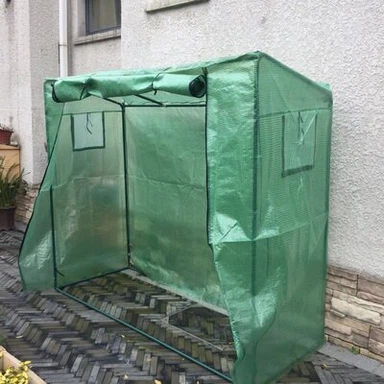
Whether you're stocking large polytunnel greenhouse kits for commercial growers or backyard greenhouse units for residential customers, effective sourcing is essential. In the thriving garden supplies market, success isn't just about having the right products-it's about acquiring them in the right way. For businesses looking to scale, increase margins, and secure a competitive edge, mastering the art of buying wholesale and importing in bulk is non-negotiable.