How To Choose Greenhouse Cover Material: A Practical Guide To PE Film
Sep 01, 2026
Choosing the right greenhouse cover material is an important purchasing decision for growers, wholesalers, retailers, and greenhouse distributors. The covering affects light transmission, weather resistance, service life, maintenance requirements, and the overall operating cost of a greenhouse.
For many polytunnel and commercial growing structures, PE film is a practical covering solution because it combines flexibility, relatively low cost, good light transmission, and straightforward installation. However, not all greenhouse film should be evaluated in the same way. Film thickness, UV resistance, mechanical strength, and expected service life all need to be considered together.
This guide explains the main factors buyers should evaluate when selecting greenhouse plastic and how to choose the right poly film for greenhouse applications.
What Is Greenhouse Cover Material?
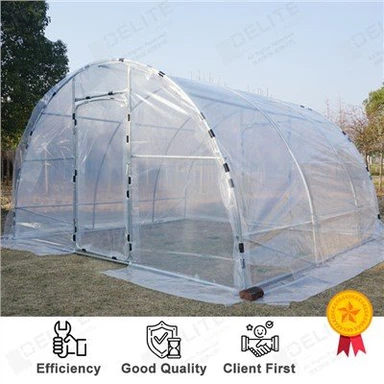
Greenhouse cover material is the protective layer installed over the frame of a greenhouse to create a controlled growing environment. In polytunnel structures, this covering is commonly made from polyethylene, or PE.
PE film is often referred to as greenhouse film, greenhouse plastic, or poly film. Although these terms are sometimes used interchangeably, the important point for buyers is the actual performance of the film rather than the name used to describe it.
A suitable covering should provide enough light for plant growth while also withstanding outdoor exposure. For B2B buyers, the right material should also offer a practical balance between purchase cost, expected service life, installation requirements, and replacement cost.
Why PE Film Is Widely Used for Greenhouses
PE film has become a common choice for polytunnels and other flexible greenhouse structures because it offers several practical advantages.
First, PE is flexible and can be installed over curved or arched greenhouse frames without requiring rigid panels. This makes it particularly suitable for polytunnel structures with long spans and relatively simple frame systems.
Second, greenhouse plastic is generally light and relatively easy to handle during installation. This can be especially useful for larger structures where the covered area is substantial. Penn State Extension notes that high tunnels are commonly covered with a single layer of greenhouse-grade polyethylene film, illustrating how widely PE film is used in this type of growing structure.
Cost is another major consideration. For growers and commercial buyers working with larger greenhouse areas, PE film can provide a more economical covering solution while still delivering the basic performance required for protected cultivation.
PE film is also relatively straightforward to replace. When the covering eventually reaches the end of its service life, the film can be removed and replaced without rebuilding the entire greenhouse frame.
You can explore different PE-covered structures in the polytunnel greenhouse range to compare how greenhouse size and structure affect covering requirements.
Key Factors When Choosing Greenhouse Film
Selecting greenhouse film should involve more than comparing prices. Buyers should evaluate several technical factors at the same time.

1. Film Thickness
Film thickness is one of the first specifications buyers usually encounter. A thicker film can provide greater mechanical strength and resistance to tearing, but thickness alone does not determine overall film performance.
For commercial purchasing, it is better to consider thickness together with UV stabilization, tensile strength, expected service life, and local weather conditions.
A very thick film is not automatically the best choice for every greenhouse. The objective is to select a specification that matches the structure, environment, and expected usage.
2. UV Resistance
UV resistance is one of the most important factors when choosing greenhouse plastic for outdoor use.
Unlike indoor materials, greenhouse film is continuously exposed to sunlight. UV radiation can gradually degrade polymers, causing the film to become less flexible and more vulnerable to cracking or tearing.
For this reason, buyers should pay attention to whether the PE film has been UV stabilized and what service life is expected under normal outdoor conditions.
When comparing suppliers, it is useful to ask for clear information about UV treatment, expected lifespan, and warranty terms rather than relying only on the appearance or thickness of the film.
3. Light Transmission
Plants need sufficient light for photosynthesis, so the optical performance of greenhouse film directly affects the growing environment.
A good greenhouse covering should allow adequate sunlight to enter the structure while maintaining the physical protection required for outdoor cultivation.
For buyers, the right balance depends on the crops being grown, local sunlight conditions, and the purpose of the greenhouse. The objective is not simply to choose the film with the highest possible light transmission, but to select a covering that suits the growing application.
4. Tear Resistance and Tensile Strength
Large greenhouses place considerable demands on the covering. Wind can pull against the film, while installation and handling can create additional stress.
This makes mechanical strength important, especially for large-scale polytunnels and commercial greenhouse projects.
Tear resistance helps reduce the risk of small punctures developing into larger failures, while tensile strength indicates how well the film can withstand pulling forces.
Buyers should therefore consider the film as part of the complete greenhouse system rather than as an isolated material.
5. Weather Resistance
Greenhouse film remains outdoors for extended periods, so it needs to cope with changing weather conditions.
Wind, rain, temperature changes, sunlight, and repeated expansion and contraction can all affect the covering over time. The severity of these conditions varies significantly between regions.
For this reason, buyers should match the film specification to the local climate and installation environment. A greenhouse installed in an area with stronger winds may require different considerations from one used in a mild seasonal environment.
6. Expected Service Life
Service life should always be considered alongside price.
A lower-cost film may appear attractive during the initial purchase, but more frequent replacement can increase labor, logistics, and maintenance costs over the longer term.
On the other hand, selecting a higher-performance film without considering the actual application can also increase the initial investment unnecessarily.
For B2B purchasing, a better approach is to evaluate the total cost of ownership, including expected replacement frequency and installation labor.
How Climate Affects Your Choice of Greenhouse Plastic
The same greenhouse film specification may not be equally suitable for every market.
Buyers should consider factors such as annual sunlight exposure, wind conditions, temperature variation, rainfall, and the expected growing season.
For example, strong and prolonged sunlight increases the importance of UV resistance. Areas exposed to frequent strong winds place greater demands on the mechanical strength of the covering and the stability of the greenhouse frame.
This is why greenhouse film should be selected according to the complete application rather than by using a single specification as a universal standard.
What to Consider When Covering a Greenhouse
The material itself is only one part of the covering process. Proper installation can also affect the performance and service life of PE film.
Before covering a greenhouse, buyers and installers should confirm that the film dimensions are suitable for the greenhouse structure. The covering needs enough material to reach the required fixing points without excessive tension or unnecessary slack.
The frame should also be properly prepared. Sharp edges, protruding hardware, or poorly finished connection points can create additional stress on the film.

For larger structures, the installation method becomes even more important because a larger surface area is exposed to wind loads. The greenhouse frame, anchoring system, fixing method, and covering material should work together as one system.
Common Mistakes When Choosing Greenhouse Film
One common mistake is choosing greenhouse plastic based only on price. Initial cost is important, but it should be considered alongside expected service life and replacement costs.
Another mistake is assuming that thicker film is always better. Thickness is only one specification and should not be evaluated independently from UV resistance and mechanical performance.
Some buyers also focus heavily on the film while overlooking the greenhouse frame and installation system. A strong covering cannot compensate for an unsuitable frame or poor anchoring.
Finally, buyers sometimes fail to define the intended application before requesting quotations. Suppliers can provide more appropriate recommendations when they know the greenhouse size, local climate, crop type, expected service life, and target market.
Choosing PE Film for a Large Polytunnel
Large polytunnels require careful coordination between the greenhouse structure and the covering because the covered area is significantly greater than that of a small greenhouse.
A wider or longer structure may require more robust framing, secure anchoring, and a greenhouse film specification that can handle the demands of a large outdoor surface.
For buyers evaluating larger protected-cultivation systems, the Large Polytunnel Professional Kit (20ft Wide) provides an example of a large PE-covered polytunnel designed around a galvanized steel frame.
The important purchasing principle is not to select the covering in isolation. The film specification should be considered together with greenhouse dimensions, frame construction, installation method, and the environmental conditions where the structure will be used.
Looking for the Right PE-Covered Greenhouse?
Once you have defined the required film performance, greenhouse size, and local growing conditions, the next step is to evaluate the complete structure as a system. Explore our plastic greenhouse range to compare different sizes and configurations. For wholesale, distribution, or private-label projects, you can also contact us to discuss specifications, packaging, and sourcing requirements.
FAQ About Greenhouse Cover Material
What is the most common greenhouse cover material for polytunnels?
PE film is widely used for polytunnels because it is flexible, lightweight, relatively economical, and suitable for covering arched greenhouse structures. High tunnels commonly use greenhouse-grade polyethylene film.
Is thicker greenhouse film always better?
No. Thickness is only one factor in greenhouse film performance. UV resistance, tensile strength, tear resistance, weather exposure, and expected service life should also be considered before selecting a specification.
How long does greenhouse plastic last?
There is no single service-life figure for all greenhouse plastic. Actual durability depends on the film specification, UV stabilization, climate, installation conditions, and exposure to weather. Buyers should ask suppliers for expected service life under the intended conditions.
What should I look for when buying greenhouse film?
Start with the greenhouse dimensions and local climate. Then compare film thickness, UV resistance, light transmission, mechanical strength, expected service life, and warranty terms. For commercial purchasing, replacement and installation costs should also be included in the evaluation.
Does greenhouse film need UV protection?
For outdoor greenhouse applications, UV resistance is an important consideration because prolonged solar exposure can degrade plastic film. Buyers should confirm whether the film is UV stabilized and understand the supplier's expected service life and warranty.
What is the difference between greenhouse plastic and greenhouse film?
In many purchasing contexts, greenhouse plastic, greenhouse film, and PE film refer to polyethylene film used as a greenhouse covering. The exact specification matters more than the terminology, so buyers should check the material, thickness, treatment, and performance characteristics.
Is PE film suitable for large commercial polytunnels?
Yes. PE film is commonly used on high tunnels and other large protected-growing structures. For larger projects, buyers should pay particular attention to film strength, UV resistance, installation, anchoring, and compatibility between the covering and greenhouse frame.