What Is A Greenhouse
May 25, 2022
CONTENT :
What is a Greenhouse?
Greenhouse, also known as conservatory, refers to a room with facilities such as cold protection, heating and light transmission for cultivating temperature-loving plants in winter. In the season that is not suitable for plant growth, it can provide growth period and increase yield, and is mostly used for plant cultivation or seedling raising of warm vegetables, flowers, forest trees and so on in low temperature season. Greenhouses are buildings that control or partially control the environment in which plants grow. Mainly used for non-seasonal or non-regional plant cultivation, scientific research, addition breeding and ornamental plant cultivation.
Definition and Basic Structure
A greenhouse is a structure with walls and roofs primarily constructed from transparent materials like glass, acrylic, or polycarbonate. Its purpose is to harness sunlight, trap heat, and maintain optimal humidity levels for growing plants year-round. The transparent walls allow solar radiation (visible light) to penetrate while limiting the escape of infrared radiation (heat), creating a microclimate ideal for cultivating plants in all seasons.
Key components of greenhouse structures include:
- Frame: Typically made of wood, aluminum frame, PVC, or galvanized steel pipes for durability.
- Glazing: Transparent panels (tempered glass, plastic, or polycarbonate panels) that let in sunlight.
- Ventilation systems: To regulate temperature and humidity.
- Shading systems: Adjustable covers to protect plants from excessive sunlight.
Types of Greenhouse
There are many greenhouses and greenhouse suppliers in the market. According to their categories, greenhouses can be classified as:
- Commercial Tunnel such as POLYTUNNEL GREENHOUSES
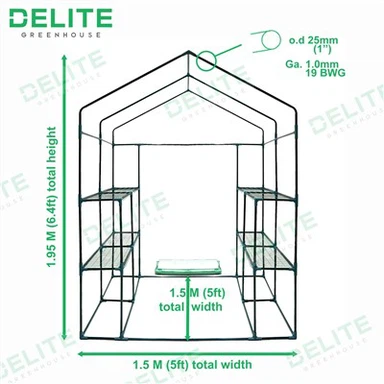
- Residential Greenhouse such as: WALK IN GREENHOUSES, MINI GREENHOUSES
Residential greenhouse sellers also like to rank the greenhouse by size as follows:

Historical Development
The concept of greenhouses dates back to ancient civilizations. Roman engineers reportedly built primitive greenhouses using pits, fires for heat, and translucent mica sheets to grow cucumbers for Emperor Tiberius. However, modern greenhouses began taking shape during the Renaissance.
Stage 1: 15th–16th centuries: European explorers brought exotic plants from the Americas, spurring the need for controlled environments to protect delicate specimens. Early greenhouses, called glasshouses, used basic designs with wood and glass.
Stage 2: Victorian era: Advances in iron and glass manufacturing led to elaborate greenhouse designs, such as London's Crystal Palace (1851), which showcased the potential of large-scale transparent structures.
How Greenhouses Work: The Science Explained
The greenhouse effect-both in artificial structures and Earth's atmosphere-relies on the interplay of sunlight and heat retention.
Solar Radiation and Heat Trapping
Stage 1: Sunlight enters: Transparent walls allow short-wave solar radiation (visible light and UV) to pass through and warm the soil, plants, and air inside.
Stage 2: Heat emission: Surfaces inside the greenhouse absorb sunlight and re-emit energy as long-wave infrared radiation (IR).
Stage 3: Trapped heat: The glazing materials are less transparent to IR, preventing heat from escaping. This creates a warmer internal environment than the outside.
An easy experiment to demonstrate this effect involves two jars: one covered and one open. The covered jar traps heat, mimicking a greenhouse, while the open jar does not.
Humidity and Condensation
Greenhouses also retain moisture. As plants release water vapor through transpiration, the enclosed space maintains higher humidity, reducing the need for frequent watering.
Modern Greenhouse Designs and Materials
Today's greenhouses range from small backyard setups to sprawling commercial complexes. Innovations in materials and technology have enhanced their efficiency:
Glazing options:
- Glass: Traditional and durable but heavy and expensive. Tempered glass is often used for improved safety and durability.
- Polycarbonate panels: Lightweight, shatterproof, and offers UV protection.
- Acrylic: High light transmission and resistant to weathering.
Structural materials: Galvanized steel or aluminum frames provide strength, while PVC is used for cost-effective DIY greenhouse kits.
Smart systems: Automated vents, hydroponics, and climate control software optimize growing conditions and energy efficiency.
Applications of Greenhouses
Greenhouses serve diverse purposes beyond gardening:
- Agriculture: Grow crops like tomatoes, cucumbers, and flowers year-round, independent of seasons.
- Research: Study plant biology, hybridization, and climate resilience under controlled conditions.
- Conservation: Protect endangered plant species from harsh environments.
- Urban farming: Rooftop and vertical greenhouses address food security in cities.
- Renewable energy: Some greenhouses incorporate solar energy systems to power their operations.
The Greenhouse Effect and Earth's Climate
While artificial greenhouses benefit agriculture, Earth's natural greenhouse effect is vital for life. Atmospheric gases like carbon dioxide, methane, and water vapor act like a greenhouse's glass, trapping heat to maintain an average global temperature of 15°C (59°F). Without this effect, Earth would be a frigid -18°C (-0.4°F).
However, human activities have intensified this effect by increasing greenhouse gas emissions, leading to global warming and climate change. Unlike artificial greenhouses, Earth's system lacks physical barriers; instead, gases in the atmosphere selectively absorb and re-emit infrared radiation. This process, known as radiative forcing, contributes to the overall warming of the planet.
The main greenhouse gases contributing to climate change include:
- Carbon dioxide (CO₂): Primarily from burning fossil fuels and deforestation
- Methane (CH₄): From agriculture, landfills, and natural gas production
- Nitrous oxide (N₂O): From agricultural practices and industrial processes
- Fluorinated gases: Synthetic compounds used in various industrial applications
These emissions have led to a significant temperature increase over the past century, resulting in various forms of climate pollution and environmental challenges.
Conclusion
Greenhouses are marvels of human ingenuity and natural science. From ancient Roman pits to cutting-edge smart farms, they exemplify how controlled environments can sustain life and advance agriculture. Understanding their design and principles also sheds light on critical environmental challenges, reminding us to balance innovation with ecological responsibility.
As we continue to develop greenhouse technology, it's crucial to consider their role in sustainable agriculture and their potential to mitigate some effects of climate change. By improving energy efficiency, utilizing renewable energy sources, and optimizing growing conditions, greenhouses can play a part in creating more resilient and sustainable food systems. Additionally, the lessons learned from managing artificial greenhouse environments can inform our approach to addressing global climate issues and preserving our planet's delicate ecological balance.
FAQs:
Q: What is the basic structure and purpose of a greenhouse?
A: A greenhouse is a structure with walls and roofs primarily made from transparent materials like glass, acrylic, or polycarbonate. Its purpose is to harness sunlight, trap heat, and maintain optimal humidity levels for growing plants year-round. The transparent walls allow solar radiation to penetrate while limiting the escape of infrared radiation, creating a microclimate ideal for cultivating plants in all seasons.
Q:What are the different types of greenhouses available?
A: Greenhouses can be classified into commercial and residential types. Commercial types include Poly Tunnel Greenhouses, while residential types include Walk-In Greenhouses and Mini Greenhouses. They can also be classified by size, such as Polytunnel Greenhouse, Walk in Greenhouse, Lean-to Greenhouse, and Mini Greenhouse.
Q: How does a greenhouse work?
A: A greenhouse works by allowing sunlight to enter through its transparent walls, which warms the soil, plants, and air inside. Surfaces inside the greenhouse absorb this sunlight and re-emit it as long-wave infrared radiation. The greenhouse's glazing materials are less transparent to this radiation, preventing heat from escaping and creating a warmer internal environment.
Q: What are the applications of greenhouses?
A: Greenhouses serve diverse purposes beyond gardening. They are used in agriculture to grow crops year-round, in research to study plant biology and climate resilience, in conservation to protect endangered plant species, in urban farming to address food security, and in renewable energy to power their operations.