

What is the easiest way to build a DIY hoop house?
Apr 28, 2026
Building a DIY hoop house is one of the most practical ways to protect plants, start crops earlier, and keep a garden productive for longer. The easiest way is to use a ready-made hoop house kit, choose a sunny and level location, install the hoops evenly, stretch a UV-resistant polyethylene cover over the frame, and secure the structure firmly to the ground.
A hoop house is simple in concept, but small details matter. A loose cover, weak anchoring, poor drainage, or missing ventilation can make the structure harder to use and less durable. That is why the best approach is not only to build quickly, but to build in the right order.
The easiest DIY hoop house is not the cheapest pile of parts. It is the setup that is simple to assemble, easy to ventilate, and strong enough for the local weather.
High tunnels and hoop houses are widely used because they help extend the growing season, protect plants from severe weather, and improve growing conditions without the complexity of a fully equipped greenhouse. USDA NRCS also describes high tunnels, commonly called hoop houses, as structures that help growers extend the season and protect crops from weather exposure.
Understanding the Basics of a Hoop House
What is a hoop house?
A hoop house, also called a polytunnel or high tunnel, is a simple structure made from a series of curved hoops covered with polyethylene film. The hoops form the frame. The cover creates a protected growing area. Inside, plants receive sunlight while being sheltered from rain, wind, frost, pests, and sudden temperature changes.
Unlike a glass greenhouse, a basic hoop house usually has no heater, no automated cooling system, and no fixed benches. The University of Minnesota explains that high tunnels are large semi-permanent structures where plants are protected from many weather conditions, but they normally do not use heating or cooling systems like traditional greenhouses.
Why build one yourself?
A DIY hoop house gives gardeners and small growers more control over their growing space. It can be used for seedlings, vegetables, herbs, flowers, strawberries, or season extension crops. It is also easier to install than a permanent greenhouse, especially when the structure is supplied as a kit with pre-sized hoops, cover material, connectors, and hardware.
For most home gardeners, the easiest path is not to design every part from scratch. A kit reduces measuring errors, avoids mismatched parts, and gives the builder a clearer assembly sequence.
Choosing the Right Location
Start with sunlight
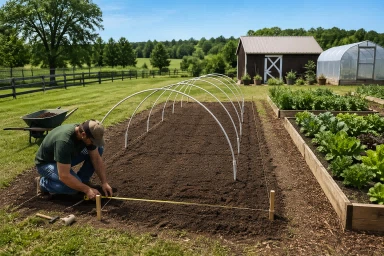
The first step in building a DIY hoop house is choosing the right location. The site should receive strong sunlight for most of the day, especially in winter and early spring when light is limited. Avoid placing the hoop house too close to tall trees, walls, fences, or buildings that can cast shade.
A sunny site helps warm the soil, supports plant growth, and reduces the risk of slow, weak seedlings. If you plan to use the hoop house in colder months, morning sunlight is especially useful because it helps raise the temperature earlier in the day.
Check drainage and ground level
The location should be well-drained. A hoop house cover sheds a large amount of water, so water can collect along the sides if the site is low or uneven. NRCS guidance notes that runoff from high tunnel covers can create drainage and ponding issues, so runoff should be directed away from the structure.
Choose ground that is level or only gently sloped. If the soil is soft, muddy, or unstable, improve the site before assembly. A solid base makes it easier to align the hoops and keep the frame square.
Do not build the hoop house first and solve drainage later. A dry, level site makes the whole structure easier to assemble, anchor, and maintain.
Think about water and access
Place the hoop house near a water source. Plants under cover do not receive direct rainfall, so irrigation is part of daily management. NRCS also recommends locating high tunnel structures near a viable water source for irrigation.
You should also leave enough space around the structure for walking, tightening the cover, cleaning, and seasonal maintenance. If the site is too tight, every small repair becomes harder.
Selecting the Right Materials
Hoops
The hoops are the main frame of the structure. They can be made from galvanized steel tubes, metal conduit, or PVC pipes. Metal hoops are more durable and better suited for wind, repeated use, and larger structures. PVC pipes are cheaper and easier to bend, but they may become brittle over time and are usually better for smaller or temporary projects. DELITE hoop greenhouses are made of hot-dip galvanized steel tubes and plastic cover, take the 3m x 3m polytunnel for example, its hoop frame is 32mm diameter and 0.8mm thickness tubes and its cover is 150gsm, life span can up to 4-5years.
For a reliable garden hoop house, galvanized steel hoops are usually the better long-term choice. They hold shape better, resist corrosion, and give the structure a cleaner, more stable frame.
Polyethylene film
The polyethylene film is the cover of the hoop house. It should be UV-resistant and thick enough for outdoor use. For high tunnel standards, NRCS specifies greenhouse-grade, UV-resistant polyethylene with a minimum thickness of 6 mil.
A thin plastic sheet may look cheaper at first, but it can tear, weaken in sunlight, or fail during wind. A proper greenhouse cover is easier to tension and usually lasts longer.
End walls
The end walls provide access and ventilation. They can be made with polyethylene film, wood framing, metal framing, or a combination of materials. A simple door is enough for many backyard hoop houses, but both ends should allow airflow when needed.
Good end walls make the hoop house easier to manage. They help with temperature control, reduce humidity, and make it easier to move trays, tools, and plants in and out.
Ground anchors
Ground anchors secure the hoop house to the soil. They may be metal stakes, ground posts, base plates, rebar anchors, or auger anchors, depending on the kit and soil conditions. This part should not be treated as optional.
A hoop house works like a sail when wind pushes against the cover. Strong anchoring helps the frame stay in position and protects the cover from sudden lifting or tearing.
Building the Hoop House
Step 1: Mark the location
Use stakes and string to mark the footprint of the hoop house. Measure both sides carefully. Then check the diagonals to confirm that the layout is square.
This step is simple, but it prevents many later problems. If the base is not square, the hoops may lean, the cover may not sit evenly, and the end walls may be harder to fit.
Practical tip
Mark the door side clearly before installing the frame. This helps you plan access, irrigation, and the direction of daily use.
Step 2: Install the hoops
Start by installing the end hoops at each end of the hoop house. Then install the remaining hoops at regular intervals along the length of the structure. Keep spacing even and check that each hoop is level and aligned.
If your kit includes ground posts, install them first and place the hoops into the posts. If you are using a simpler DIY method, make sure each hoop is firmly seated and braced before adding the cover.
Step 3: Add frame supports
Many hoop houses need ridge poles, side rails, purlins, or cross braces. These parts connect the hoops and reduce side-to-side movement. They also help the frame stay straight under wind pressure.
This is where a kit can save time. Pre-drilled or correctly sized support parts reduce guessing and make the structure easier to assemble.
Step 4: Attach the polyethylene film
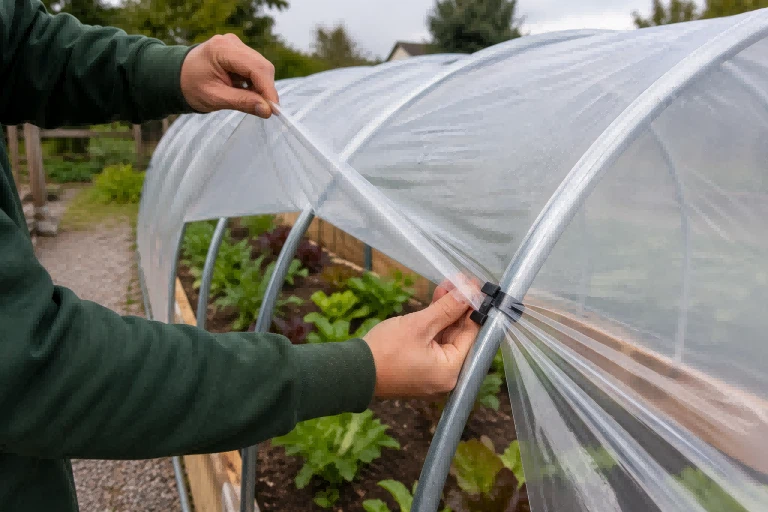
Once the hoops are installed, stretch the polyethylene film over the frame. Choose a calm day if possible. Wind makes the cover much harder to handle.
Pull the film evenly over both sides. Remove major wrinkles, but do not overstretch it. Then secure it with clips, wiggle wire, batten boards, rope, or the fastening system included in the kit.
The cover should be tight enough not to flap, but not so tight that it tears at the edges or fastening points.
Step 5: Install the end walls
After the main cover is attached, install the end walls. Secure them to the hoops and to the ground or base frame. Add a door, zipper opening, roll-up panel, or framed entrance depending on the design.
Ventilation should be planned here. On warm sunny days, enclosed tunnels can heat up quickly. The University of Minnesota published article about ventilation, that recommends opening tunnel ends for ventilation during warm sunny periods and closing them again overnight when needed.
Step 6: Install the ground anchors
Finally, install the ground anchors around the perimeter. Drive or screw them into the soil at the spacing recommended for your kit. Check that the frame does not shift when pushed gently from the side.
For windy areas, consider extra anchors, stronger base rails, or manufacturer-approved reinforcement. Do not modify a kit heavily without checking the supplier's instructions, because major changes can affect stability.
Tips for Building a DIY Hoop House
Plan ahead
Before you start building, measure the garden area and decide what you want to grow. A hoop house for seedlings may be smaller. A hoop house for tomatoes, cucumbers, or peppers needs more height and walking space.
Planning also helps you choose the right door size, bed layout, irrigation method, and ventilation style.
Use the right tools
Prepare your tools before the assembly day. At minimum, you may need a tape measure, level, hammer, drill, wrench, utility knife, gloves, and ladder. If you use a kit, read the tool list first.
The job becomes much easier when you do not stop every few minutes to search for hardware or tools.
Follow the instructions
If you are using a kit, follow the supplier's instructions carefully. Do not skip frame supports, anchor points, or cover fastening steps. These details may look small, but they affect wind resistance, cover life, and daily safety.
Get help
Building a hoop house is easier with two or three people. One person can hold the hoop, another can align it, and another can fasten the frame. Extra hands are especially useful when pulling the cover over the structure.
Manage heat and humidity
A hoop house protects plants, but it also needs daily attention. Warm air and moisture can build up inside. Open doors, end walls, or side vents when temperatures rise. Close them before cold nights, strong rain, or storms.
Conclusion
Building a DIY hoop house is a practical way to extend the growing season and protect plants from harsh weather. The easiest way is to start with a clear plan, choose a sunny and well-drained location, use durable hoops, select UV-resistant polyethylene film, secure the cover properly, and anchor the structure well.
A hoop house does not need to be complicated. It needs to be correctly placed, firmly built, and easy to ventilate. With the right kit and a careful assembly process, gardeners and growers can create a useful covered growing space without building a full greenhouse.